
How Agentic RAG solves problem with current RAG limitations
Overcome Traditional RAG Limitations with AgenticRAG—Learn how routing, query planning, and structured agents enhance RAG with real-world case studies.

In this volume 4 of coffee break concept, we will understand how AgenticRAG helps solve limitations of traditional RAG.
RAG Framework
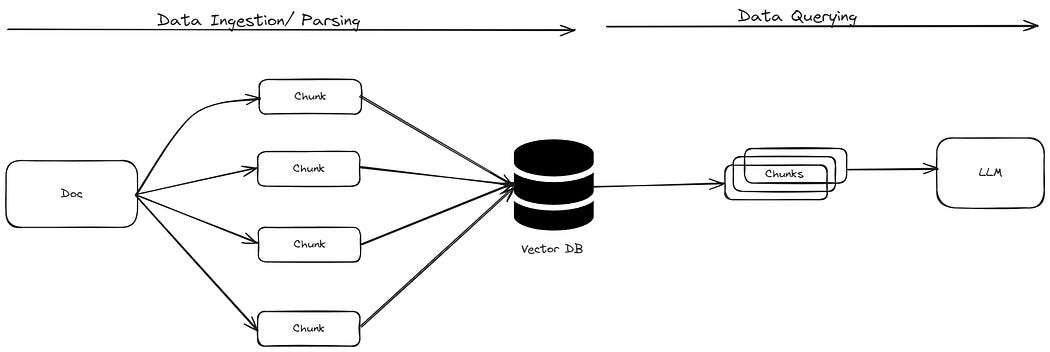
The RAG (Retrieval Augmented Generation) framework operates in a specific sequence:
Document -> Chunks-> Vector DB -> Chunk Retrieval (Top K) -> LLM
However, this sequence encounters obstacles when dealing with certain types of queries.
Problem 1: Summarization
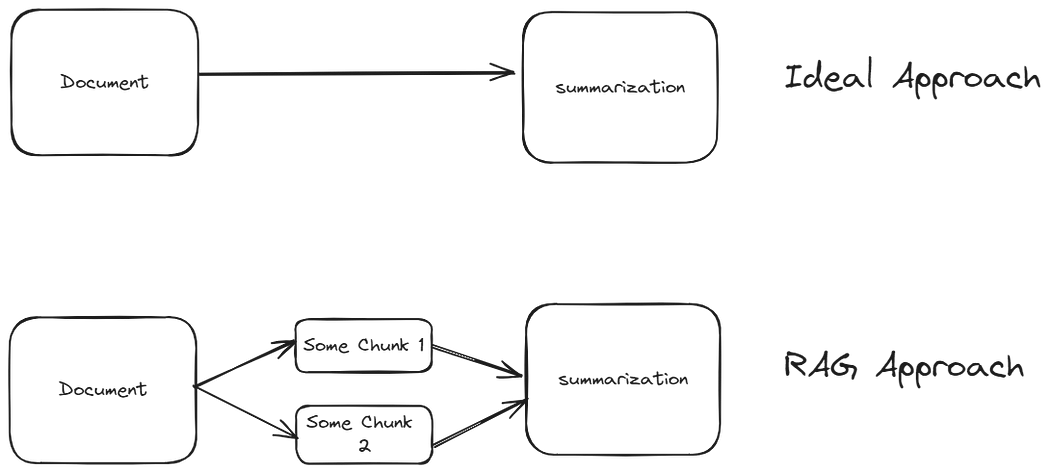
Consider a query like “Summarize the document”.
The conventional RAG approach retrieves the top K chunks and summarizes them.
But wouldn’t it be more comprehensive if it retrieved all chunks of the document and summarized them?
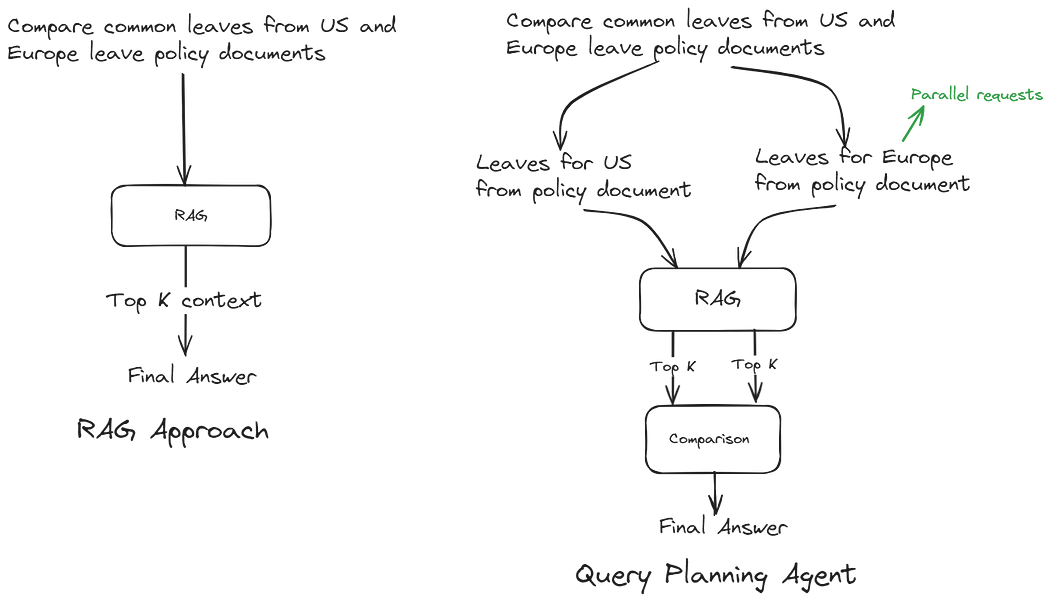
Problem 2: Comparing Documents
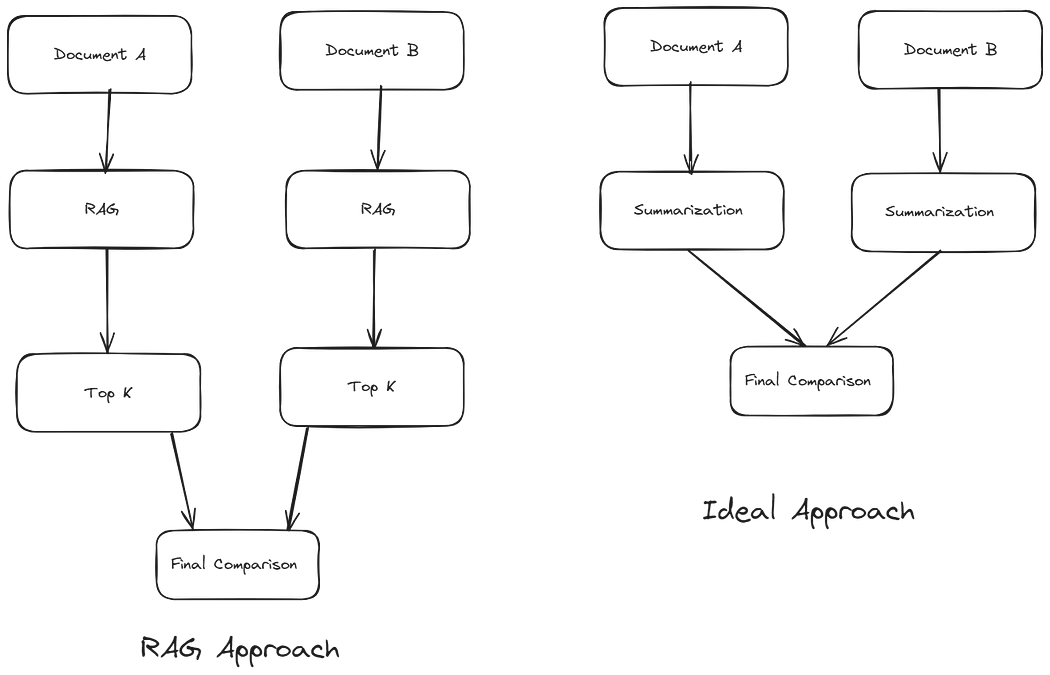
When tasked with comparing Document A and Document B, the basic RAG retrieves random chunks and attempts to compare these top K chunks.
This doesn’t paint an accurate picture as it doesn’t represent the full scope of the documents.
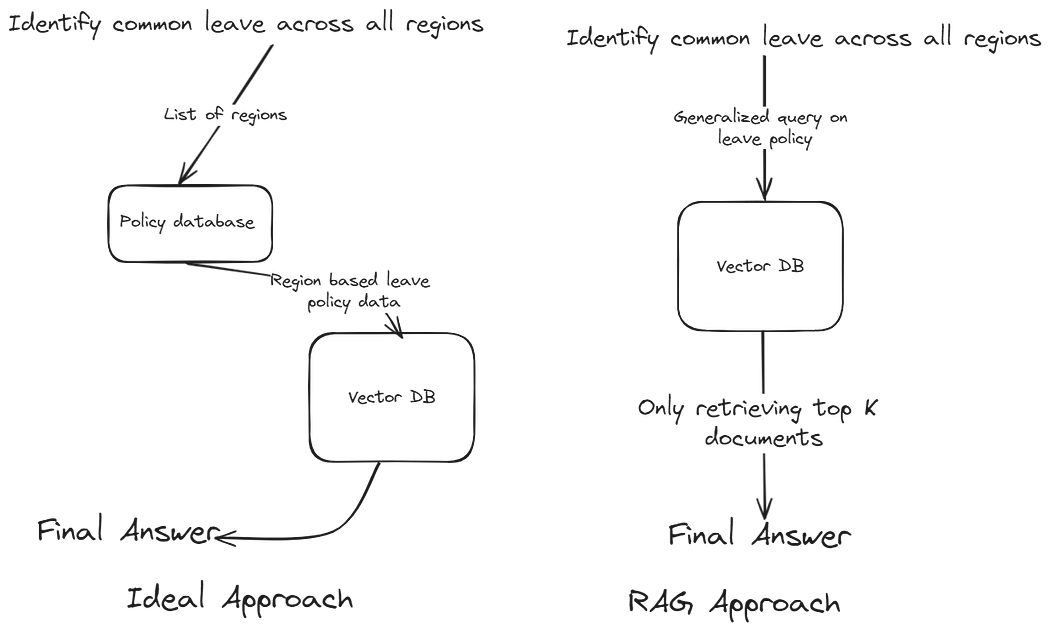
Problem 3: Structured Data Analysis
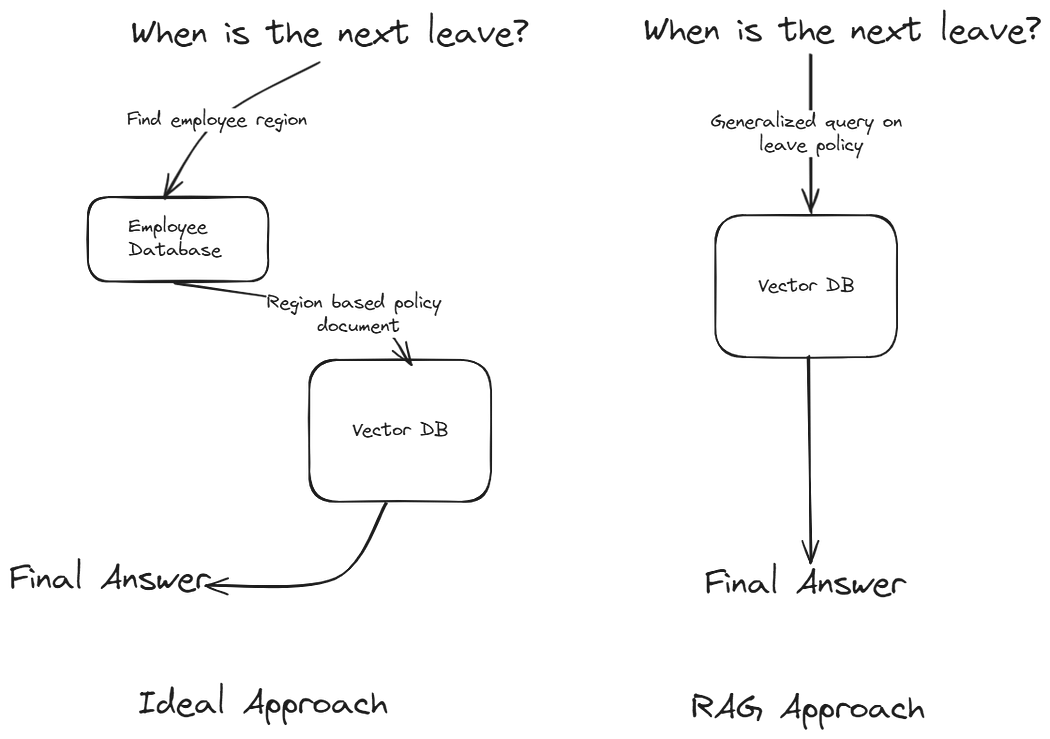
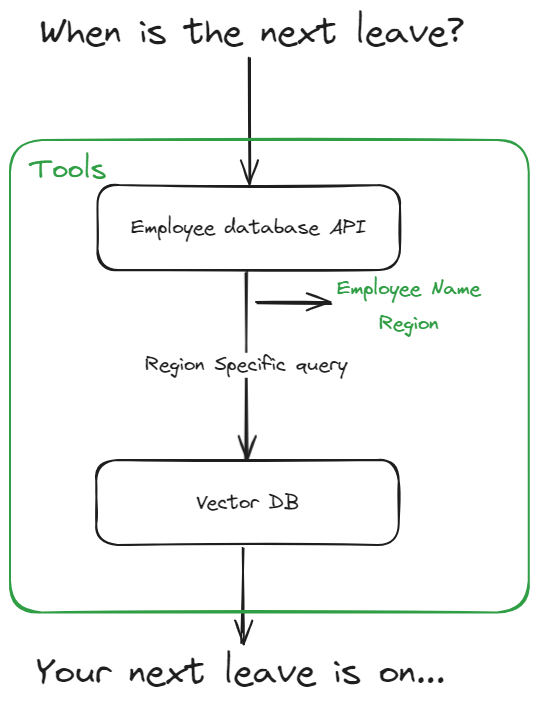
Consider a question like “When is the next leave?”.
The first step is to retrieve the region to which the employee belongs from a structured table.
Based on the region, the next leave for that region is extracted from the leave policy document.
This process isn’t as straight forward with the current RAG framework.
Problem 4: The Multi-part Question
Consider a question like “Identify common leave across all regions?”.
Imagine you have a leave policy document of a company present in 120 countries.
Since you are passing the top K contexts, the maximum number of regions that can be compared is limited to K, where K is the number of chunks passed to LLM.
Look into our AgenticRAG with LlamaIndex Course with 5 real-time case studies.
Course link:
Agentic RAG
Agentic RAG can solve this 4 problems by replacing via custom agents.
Agents will interact with multiple systems.
RAG is now one part of this system which agents can use.
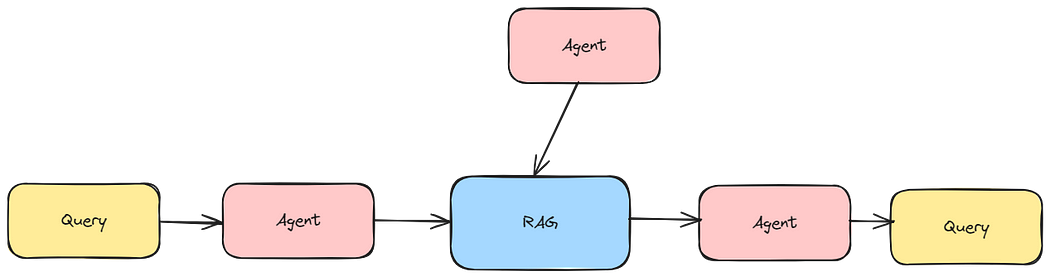
Agents uses LLMs to automate the reasoning and tool selection
RAG is just another tool which Agent may decides to use.
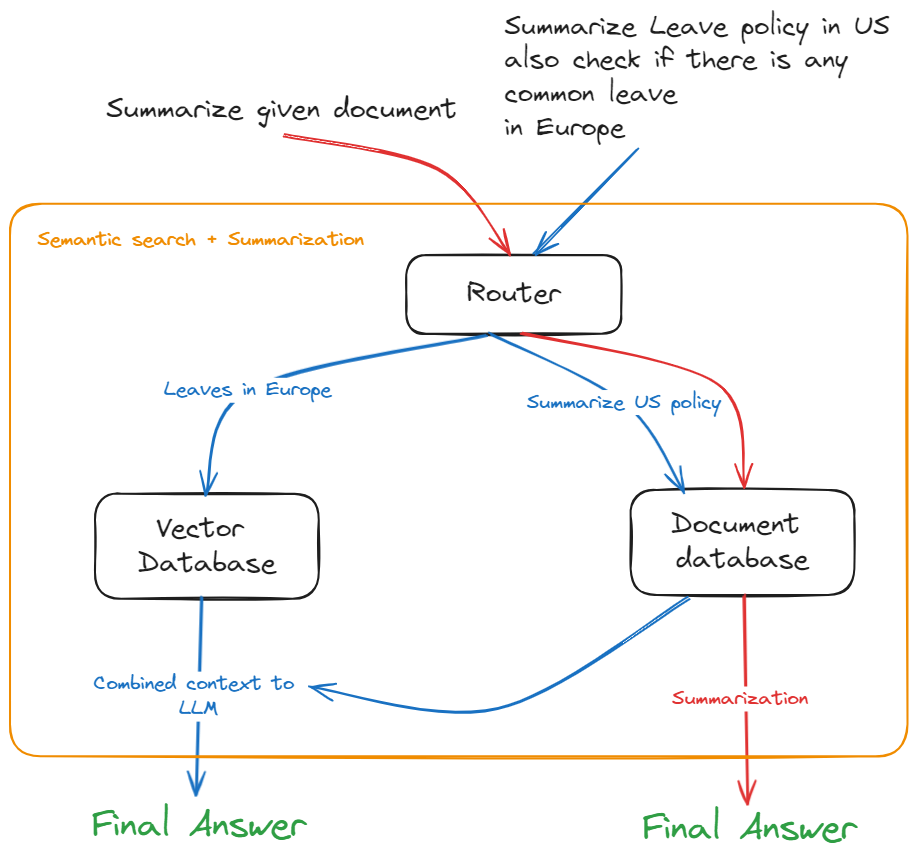
Routing Agent
Routing agents are simple agents which routes the queries.
An agent can route query in one or multiple tools.
Remember our question “Summarize the document” or a question if we want to combine “Summarization + Sematic search” can be solved using below example routing
Query Planning Agent
Query planning agent breaks down the queries into sub-queries.
Each of the sub-queries can be executed against RAG pipeline.
Tools For Agents
LLMs can have multiple tools like calling an API, infer parameters for API.
RAG is now a tool which LLM might use.
Summary
RAG has limitations when represented with complex questions.
Few of the use cases like summarization, comparison etc. can’t be solve with just RAG.
Agentic RAG can help overcome limitation of RAG.
Agentic RAG treats RAG as a tool which it can use for semantic search.
Agents equipped with routing, query planning and tools can out perform traditional RAG applications.
Your feedback as comments and likes encourages us to create better content for the community.